

Squat-proof leggings: the engineering, explained

Leggings are squat-proof when the fabric stays opaque at full stretch — no skin, no underwear showing through when you drop into a deep squat. Three things decide it: fabric density (the weight of fabric per square metre), fibre type (nylon-elastic holds its structure, softness-first blends thin out), and construction (a tight knit, reinforced seams, a high waist that stays put). Thickness on its own is not enough. A thick but low-density knit can still go sheer under tension. This guide breaks down what actually makes a legging hold, and how to test any pair before you trust it.
Most leggings pass the test standing in a change room and fail it in the squat rack. That gap — fine at rest, sheer in motion — is where cheap activewear lives. It is also where some premium leggings quietly live, which is the part nobody tells you when you hand over $150.
What does "squat-proof" actually mean?
Squat-proof means the fabric stays fully opaque when stretched to its limit, not just when you are standing still. The deep squat is the hardest test for a reason. The fabric across your glutes and inner thighs stretches well beyond its resting state, and if density drops as it stretches, light passes through. Catar Cottega's testing notes that the real benchmark is whether skin tone or underwear shows through the back panel at full hip flexion — a structural test, not a marketing line. The bend-forward-to-90-degrees check catches the most common failure before you even squat.

What makes a legging squat-proof?
Three factors decide it — density, fibre, and construction — and all three have to hold at once.
Density. Fabric weight is measured in grams per square metre (GSM). Most squat-proof leggings sit above 220 GSM, and the premium end of the scale is denser still. The trap is mid-market activewear at 180–220 GSM: it passes the standing mirror check, then fails the deep squat once the knit thins under load.
Fibre. This is where the long game is won or lost. Nylon-elastic blends hold their structure under repeated stretch. Polyester-elastane blends tend to lose recovery over months — the elastane fatigues, the yarn thins at the stress zones, and a pair that passed the squat test on day one can fail it by the second season. A dense, nylon-led blend is the more reliable base for opacity that lasts.
Construction. A tight, structured knit holds opacity better than a loose one at the same weight, which is why two leggings with the same GSM can behave completely differently. Reinforced seams stop the fabric thinning at the points that take the most strain. And a true high waist that sits at the natural waist keeps the fabric in place instead of rolling down and stretching thin across the back.
| Criteria | Dense nylon-elastic | Polyester-elastane | Softness-first nylon (e.g. Nulu-type) |
|---|---|---|---|
| Opacity at deep stretch | Holds opaque | Usually holds when dense and dark | Thins under bright light and deep flexion |
| Recovery over months | Strong — keeps shape | Drops as elastane fatigues | Prone to pilling with high-friction use |
| Hand feel | Weighty, smooth | Lighter, can feel slick | Buttery, second-skin, very light |
| Best for | Strength, gym, all-day wear | Sweat-led cardio in darker colours | Yoga, Pilates, lounge |
How do you test if leggings are squat-proof?
Four quick checks tell you before a single workout. Avurer's opacity guide lays out the worst-case version, and it works on any pair.
- Light test. Hold the fabric up to a bright window. If you can see the outline of your hand through it, it is too thin.
- Stretch test. Pull the fabric hard with both hands. If the colour lightens noticeably, it will be sheer in a squat.
- Squat test. Put them on over bright, patterned underwear, stand in front of a mirror in natural light, and drop into a deep squat. Check the glutes and inner thighs. Any pattern showing through means they fail. Bathroom light is too forgiving — use daylight.
- Flashlight test. Hold your phone torch behind the stretched fabric. Quality fabric blocks most of the light even then.
Are Lululemon Align leggings squat-proof?
The Align passes in forgiving conditions and strains in real ones. It is built on a softness-first nylon-Lycra fabric designed for a second-skin feel, which is exactly why women love it for yoga and Pilates. But reviewers consistently point out that it operates at the edge of its structural limits: under bright light or deep flexion the fabric can thin, and the soft yarn is more prone to pilling with high-friction training. Within Lululemon's own range, the denser, more compressive Wunder Train is the squat-proof pick — the Align belongs on the mat, not under a loaded barbell. It is a fair illustration of the wider point: softness and squat-proofing pull in different directions, and the fabric has to be engineered for both.
What to look for when you buy
Buy on how the fabric behaves under stretch, not on the standing-still mirror check. The shortlist: a weighty, dense knit; a nylon-elastic blend over polyester for recovery that lasts; a true high waist that sits at the natural waist; reinforced seams; and a darker colour if you are unsure. Then run the squat test in natural light before you trust them with anything.
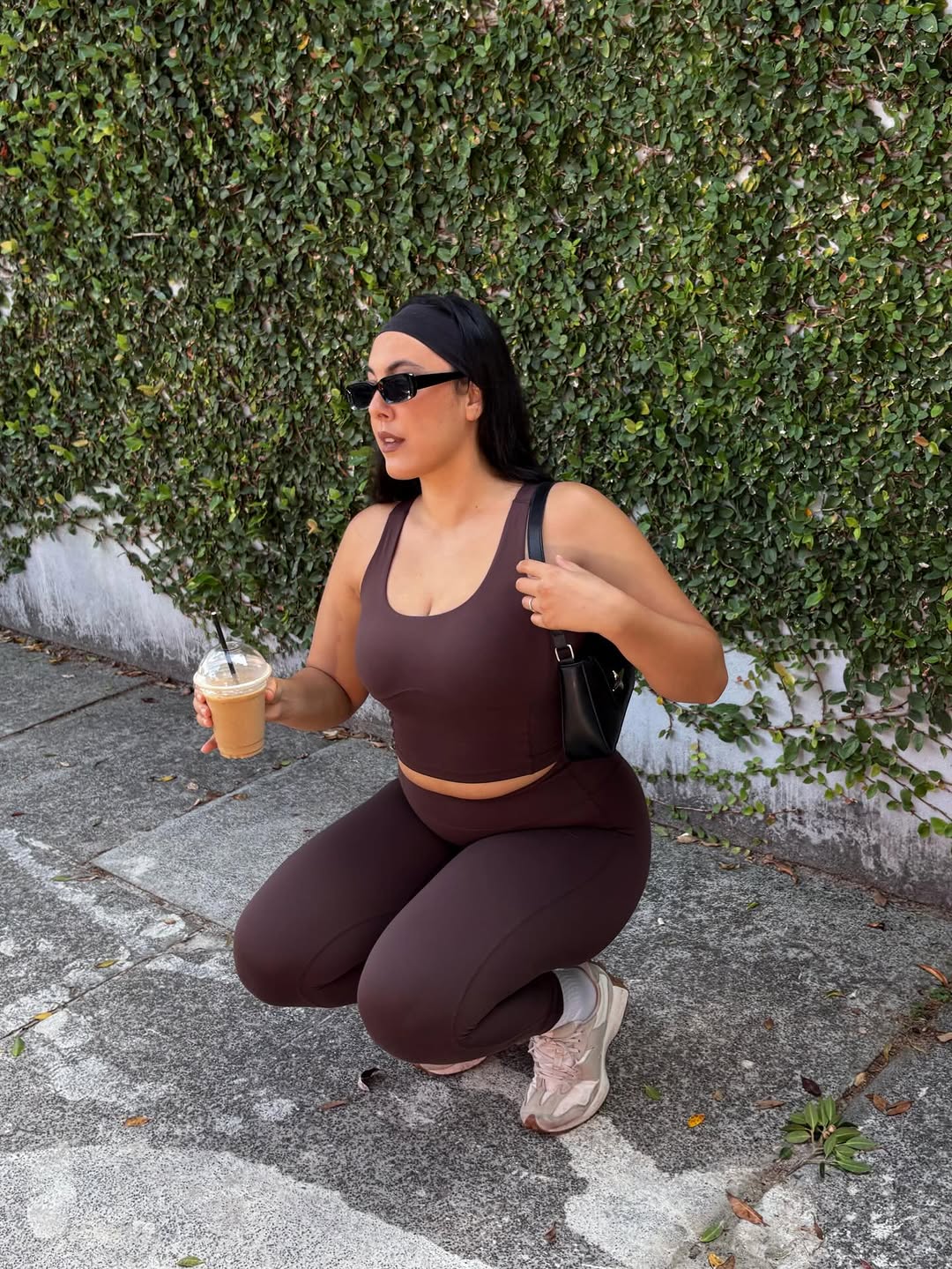
This is the brief Womene's Moments High Waisted Leggings are built to. They are knitted in a weighty, four-way-stretch nylon-elastic blend, designed to stay opaque through a deep squat and hold shape through the wash, with a high rise that sits at the natural waist and stays put through the movement. They run in one size range, 2 to 2XL — same fabric, same fit logic across every size, not an extended-sizing afterthought — and they are designed in Sydney. The feel you would expect from a $150 legging, without the logo tax. If you want the full fit picture first, the high waisted gym leggings buyer's guide and the flare vs high-waisted comparison go deeper, and the size guide has the measurements.
Buttersoft, supportive, real.
Frequently asked questions
What does squat-proof actually mean?
Squat-proof means the fabric stays fully opaque when stretched to its limit, not only when you are standing still. The deep squat is the test because it stretches the fabric across the glutes and thighs the most. If no skin or underwear shows through at the bottom of the squat, the leggings hold.
How do you tell if leggings are squat-proof?
Put them on over patterned underwear, stand in natural light in front of a mirror, and drop into a deep squat. If you can see the pattern through the fabric, they are not squat-proof. You can also hold the fabric to a window or stretch it hard — if it lightens or you can see through it, it will be sheer in motion.
What leggings are not squat-proof?
Thin, low-density knits, very light colours, and softness-first fabrics built for a second-skin feel tend to fail under deep stretch. Fabric weight below roughly 220 GSM is a warning sign, though knit structure and fibre matter as much as the number. Polyester-elastane blends can also lose opacity over months as the stretch fibre fatigues.
Are Lululemon Align leggings squat-proof?
The Align passes in forgiving conditions but can thin under bright light and deep flexion, and the soft fabric pills more easily with high-friction training. It is built for yoga, Pilates, and lounge rather than loaded squats. Within Lululemon's range, the denser Wunder Train is the more reliable squat-proof option.
Is Align or Wunder Under better for squats?
For squats and higher-intensity training, the Wunder Under (now sold as Wunder Train) is the better pick — it is denser and more compressive, so it stays opaque and stays put. The Align is the better choice for yoga, Pilates, and casual wear where comfort matters more than compression.
What GSM is squat-proof?
As a rough guide, squat-proof leggings usually sit above 220 GSM, and the premium end is denser again. But GSM alone is not the whole story — a tight knit in a dense nylon-elastic blend can outperform a heavier but looser fabric. Treat the number as a starting filter, then run the squat test.
Are black leggings more squat-proof than coloured ones?
Darker colours hide minor thinning better, so black and deep tones are a safer bet if you are unsure of the fabric. That said, a genuinely dense, well-constructed legging stays opaque in any colour. Womene's Moments High Waisted Leggings are built to hold opacity through a deep squat across the range, with coffee bean and black among the darker options if you want the extra margin.
Share:
Leggings with pockets: which ones actually hold your phone
Activewear sets: what to look for in a matching sports bra and leggings